Irreparable Tyre Damage
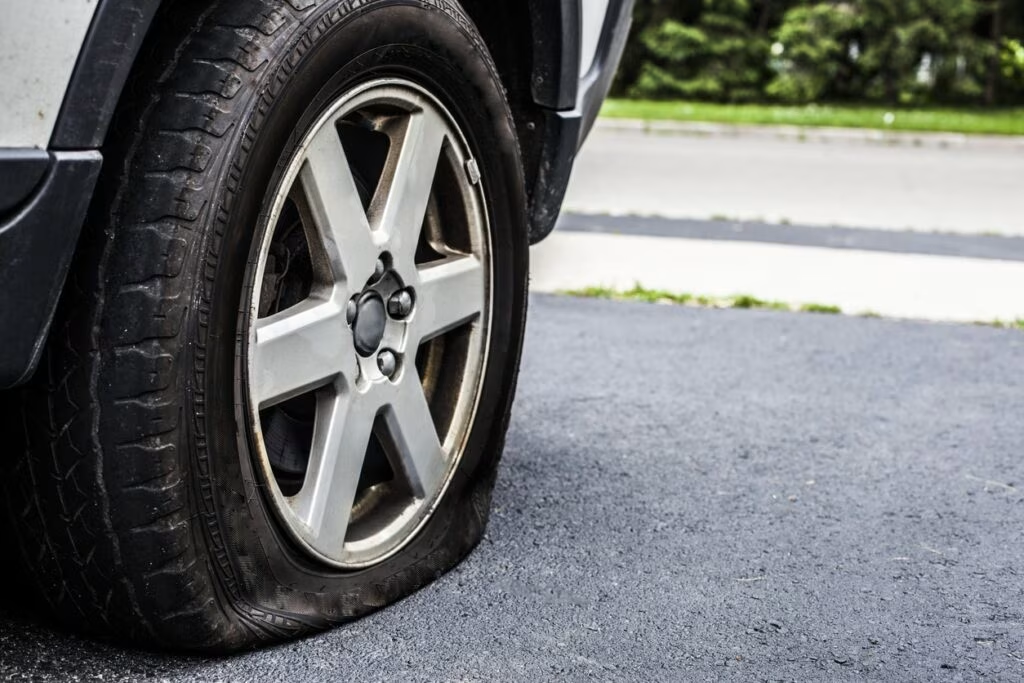
Don’t be tempted to drive those extra few kilometres on a flat tyre – even if the repair shop is “just around the corner”. Doing so will likely cause permanent tyre damage.
Rim Creasing
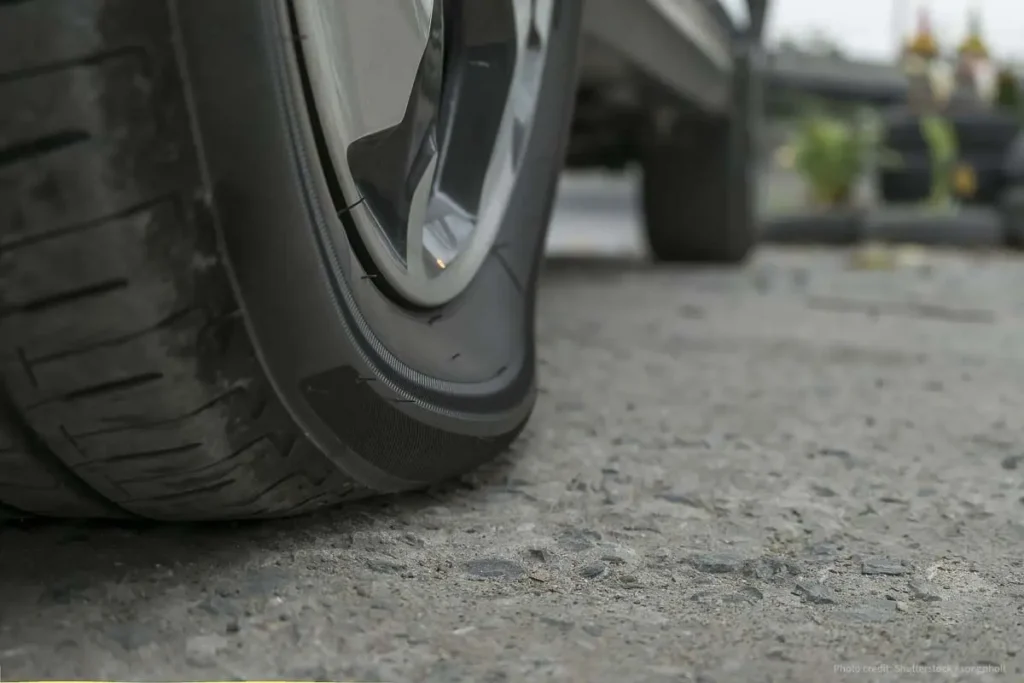
Sidewall creasing is a leading cause of tyre damage and often occurs when the tyre is driven flat or severely under-inflated. Creasing happens when the outer rim/edge of the wheel presses a stress seam along the tyre’s sidewall. This pinching effect weakens the tyre and will likely result in a sudden “blowout” or disintegration of the tyre.
Rim creasing is particularly dangerous because the damage to the tyre may not be visible externally. As a result, the vehicle owner will often assume that because the tyre is able to hold air and no damage is visible, the tyre is safe to drive.
In actual fact, if a tyre has been driven flat, it should be swapped for the spare tyre and taken to a fitment specialist for an internal inspection. Tyres that fail in response to rim creasing often do so spontaneously, at highway speeds, and are difficult to control.
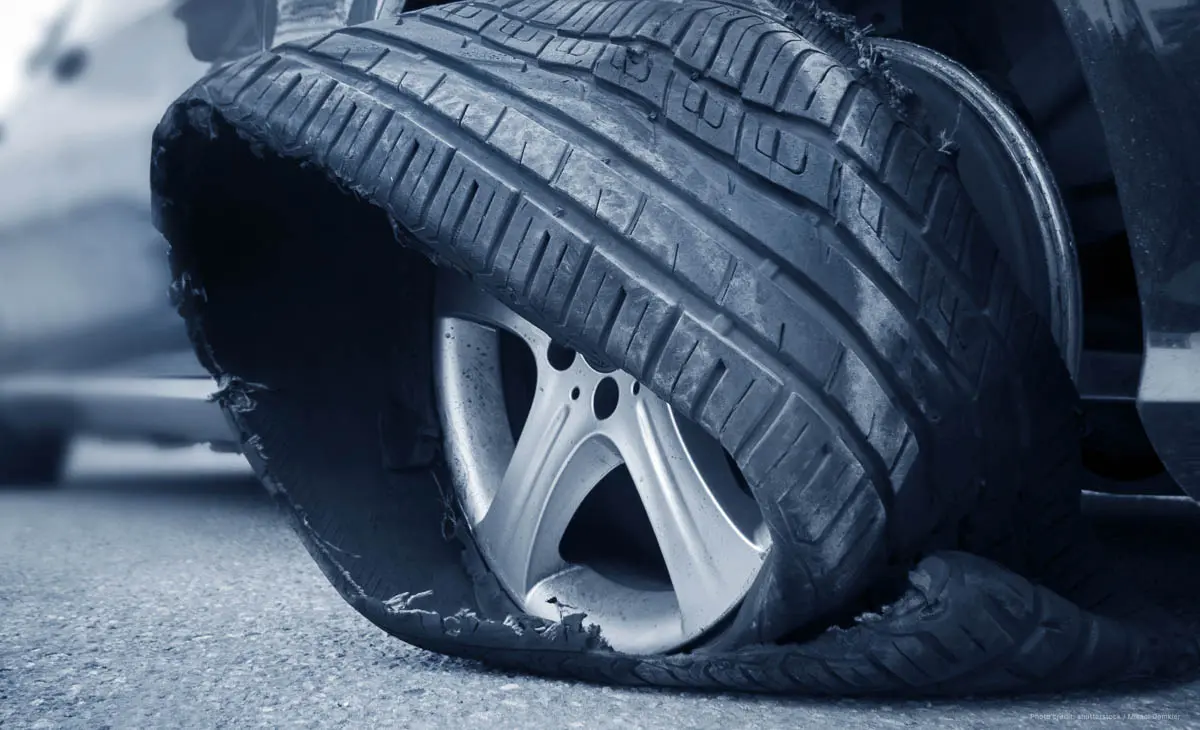
Evidence of a tyre that has failed due to rim creasing is generally characterised by a perfectly circular separation between the tread-belt and sidewall.
Repair or Replace
In the event of a puncture, the tyre should be swapped for the spare as soon as possible to avoid any further damage.
Alternatively, a tyre repair kit can be a fast and effective way to temporarily repair the tyre while it’s still on the vehicle. However, the tyre should be professionally repaired by a fitment specialist as soon as possible.
Too Risky!
No attempt should be made to repair or reuse a tyre with sidewall damage. Any penetration or impact damage to a tyre’s sidewall should be considered an immediate write-off.
The Unnoticed Flat
A puncture to a front-mounted tyre is often easy to diagnose as the vehicle’s steering becomes heavy and unresponsive. However, a puncture to a rear-mounted tyre can often go unnoticed, leading to heat build-up, sidewall creasing, and catastrophic tyre failure.
A Vital Investment
Although an aftermarket Tyre Pressure Monitoring System (TPMS) can be costly, the system only needs to work once to potentially pay for itself, or more importantly, save your life.
Most modern TPM systems have a built-in alarm that warns the driver of a sudden drop in air pressure. This real-time feedback greatly increases your chances of saving the tyre, as well as lessening the performance risks associated with driving on a flat.
A Stronger Option
A heavy-duty tyre with a Light Truck carcass is far less likely to pick up a puncture than a passenger-carcass (P-metric) tyre. While most new SUVs and pick-ups are factory fitted with light-duty P-Metric tyres, vehicle owners have the option of upgrading their tyres to a Light Truck equivalent at the time of purchasing the vehicle.